
Our History
The history of the Lynden family of companies is also the history of Ed Austin and Lynden patriarch Henry “Hank” Jansen. Early on, Hank had the vision to expand a small delivery company called Lynden Transfer into something bigger. It all started in Lynden, the companies’ namesake city in northern Washington state.
Ed Austin moved from Minnesota to Lynden, WA with his family in 1887. In 1906, at age 23, he started hauling goods from the railroad station to local businesses with a wagon and a team of horses. He called his new business Lynden Transfer, and his wife Ethel handled the bookkeeping from their home in Lynden. With a wagon pulled by Queen and Scottie, Austin hauled everything from furniture to produce to animal feed. In a foreshadowing of the company’s future diversity, Austin also provided excavating, pulled the hearse for local funerals and hauled freight back and forth to the southern city of Bellingham. A second team of horses and a wagon were eventually added to keep up with the growing business.
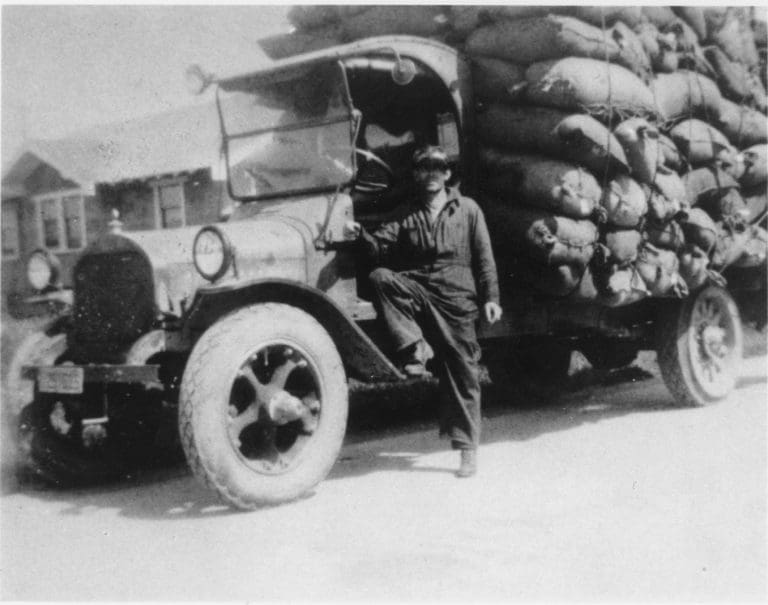
In 1921, Austin decided to replace his horses with a two-and-a-half-ton Mack truck and expanded his operation south, hauling eggs and milk to Seattle. A second truck was soon added, often driven by Ethel Austin, to meet the demand.
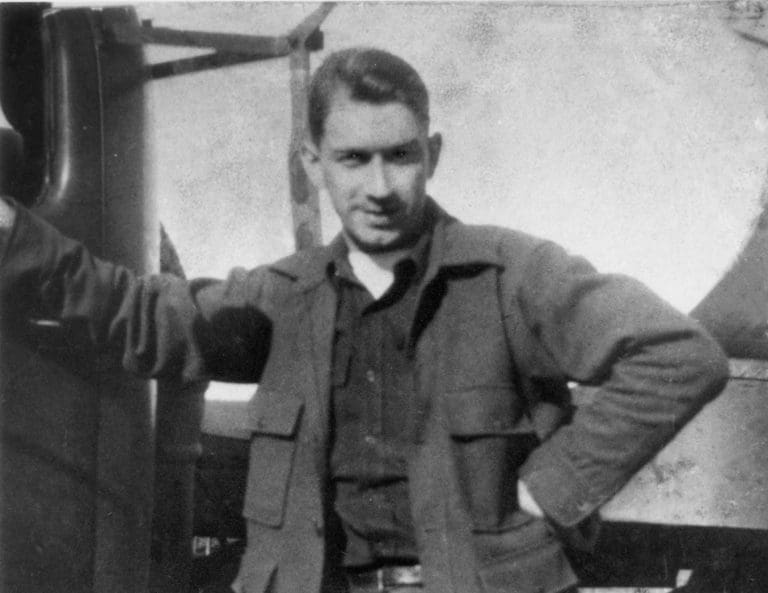
Hank Jansen moved to Lynden from North Dakota with his family, which included 11 brothers and sisters, in 1926. Hank was a first-generation Dutch immigrant with an eighth-grade education. He started working at local dairy farms as a teenager, but he was more interested in driving trucks. The first chance he got, he jumped into the cab of a truck and assumed the position of delivery boy for his father’s nursery. “I would’ve driven a truck for nothing at that point,” he said. Jansen soon made the transition from the nursery to hauling coal with his own Dodge truck for $6 per ton. In 1940, he went to work for Lynden Transfer, becoming one of Ed Austin’s regular drivers on the Seattle run.
By 1945, Ed Austin had two semi tractor-trailer rigs, one Mack truck, a pickup and four full-time drivers. After serving the Lynden community for 40 years, Austin sold the company to John Harkoff, Jr. and Richard Gourdine. The new owners didn’t own the company long. By 1947, they were looking for a buyer, and Jansen, with partners Walt Craig and Edward Hoffman, decided to purchase it on April 8, 1947.
Jansen saw expanding service north – all the way to Alaska – as the best chance for real growth. His colleagues were skeptical and told him so. In the early 1950s, some saw the Alaska-Canada (Alcan) Highway as an impossible obstacle for truck delivery. “I had a pile of letters from friends in the trucking business who said if you get on that run no one will survive that highway,” he said.
But Jansen pressed on and lined up customers for the first load in 1953. The next year, the first Lynden Transfer Kenworth left Seattle with a load of fresh meat destined for Alaska. Drivers Oscar Roosma and Glen Kok teamed up for the grueling trip and delivered the side of beef in perfect condition. The butcher at the market handled the beef like a newborn baby, then carefully put it in the bed of his pickup for people to gaze upon.
That first trip was critical as failure would have meant bankruptcy. For Alaska residents, that initial truck delivery over the Alcan Highway ushered in a new era of fresh produce, milk and meat and made Lynden a household name in Alaska.
Faster than barge and cheaper than air, Lynden began to carve out a niche in Alaska. Jansen and his drivers and mechanics knew that delivering great service was all they had to sell. And deliver they did. They were a hearty and courageous group who worked hard battling the harsh Alaska environment. Those early drivers and mechanics were the heart and soul of early Lynden and later became known as Lynden Legends and Everyday Heroes.
“Some of those early Alcan drivers would’ve packed that stuff in the last 20 miles on their backs if they had to,” Jansen said. “That’s what it’s all about: good people meeting customer’s needs.” Attracting and retaining the best people is a hallmark of the Lynden companies. Jansen demonstrated what would become the Lynden core values of putting the customer first, working hard to offer quality service, and doing it safely and efficiently.
The transition from a trucking company to an all-mode transportation company began as a survival strategy in the late 1970s. It was led by Jim Jansen, Hank’s eldest son, with an outstanding team of Lynden people. At that time, the Trans-Alaska pipeline was complete and Lynden’s trucking activity had dropped dramatically.
By focusing on opportunities and developing niche markets, Lynden leaders adapted to the changing market and evolved from an Alaska and Washington trucking company to a diverse transportation and logistics company. The transition continues today with Lynden remaining Alaska-focused and continually evolving and adapting to meet customer needs.
From its humble beginnings more than a century ago as a two-horse operation, Lynden has grown into a multi-modal provider of air, marine, trucking and logistics services. The Lynden family of companies still operates under the original philosophy: put the customer first, work hard, deliver quality and be the best.
History Timeline

Ed and Ethel Austin start hauling freight in Lynden, Washington with a team of horses and an iron-wheeled wagon. They name the company Lynden Transfer.

The Austins sell their horses and purchase their first truck to haul cargo from Lynden to Seattle.

The Austins buy their first semi rig and hire Henry Jansen as a driver for Lynden Transfer.
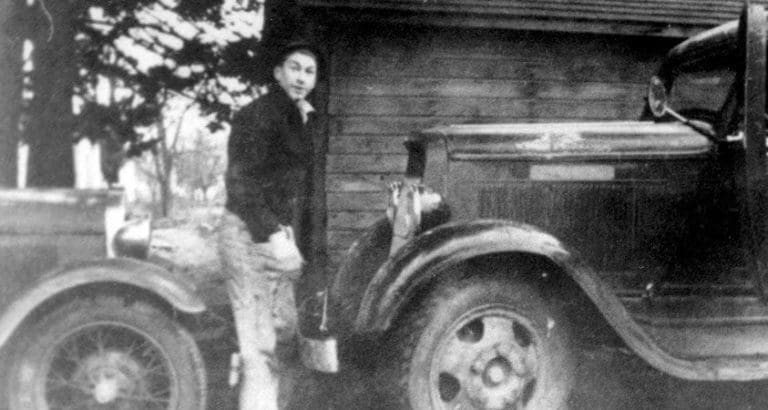
Henry Jansen and two partners purchase Lynden Transfer.

Lynden Transfer purchases L.A. George and Company, a Snohomish, Washington milk hauler, and renames the company Milky Way.

Lynden Transfer starts Alcan Highway service from Seattle to Alaska.

Lynden responds to a 9.2 magnitude earthquake in Alaska with emergency deliveries of supplies and food.

Lynden starts service from Seattle to Southeast Alaska, using the ferry service to haul mail and general freight from Prince Rupert, British Columbia.

Lynden Transfer becomes Lynden Transport, Inc. to reflect the company’s expanded activities.

Lynden starts scheduled freight and mail service between Anchorage and Southeast Alaska.
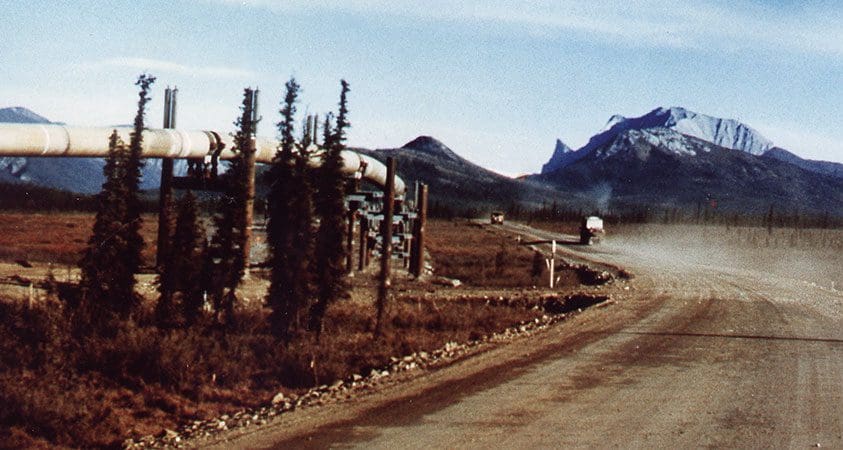
Construction of the Alaska Pipeline begins, providing expanded Alcan Highway and new Dalton Highway cargo volumes for Lynden Transport.
Milky Way designs 9-axle doubles to more efficiently haul milk, revolutionizing the milk hauling industry in Washington state.
Knik Construction is established and participates in a joint venture project near Fairbanks. Operations in Western Alaska begin in 1979.

Alaska Marine Trucking division is established to provide roll on/roll off TOTE ship service between Seattle and Alaska as an alternative to the Alcan Highway.
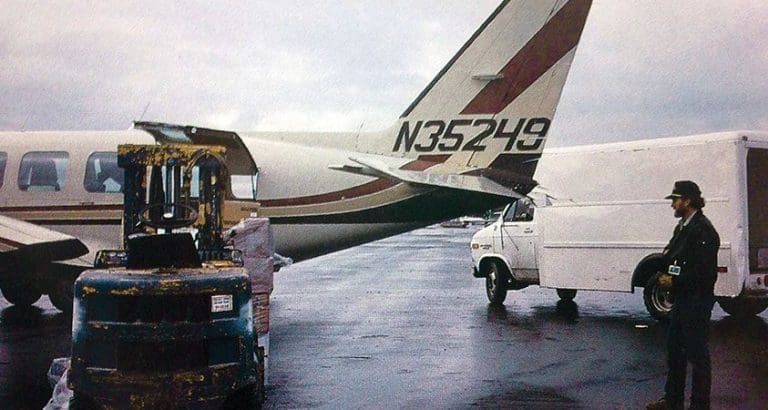
Lynden Airfreight Forwarder starts service to Alaska making Lynden the only company to serve Alaska by all three transportation modes: land, sea, and air. In 1981 it becomes known as Lynden Air Freight, Inc.
Canadian Lynden Transport is established in Edmonton, Alberta.
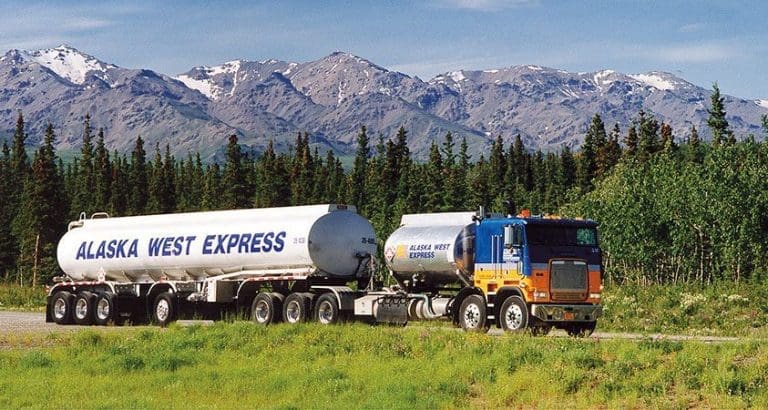
Alaska West Express is established to haul bulk commodities.

Southeast Alaska Barge Lines is acquired and renamed Alaska Marine Lines in 1982.

The company formally reorganizes, and Lynden Incorporated becomes the parent company with Lynden Transport, Alaska West Express, Knik Construction, Lynden Air Freight, Alaska Marine Lines, and LTI, Inc. as individual operating companies.

Lynden establishes Bering Marine Corporation in Bethel.

Lynden Tank Company is established to build custom, state-of-the-art tankers for Milky Way.

Lynden companies respond to the Exxon Valdez oil spill in Prince William Sound.

Lynden restores its first Alaska truck, “Number 27,” to celebrate the 50th anniversary of the Alcan Highway.

Lynden Air Cargo is established in Anchorage.
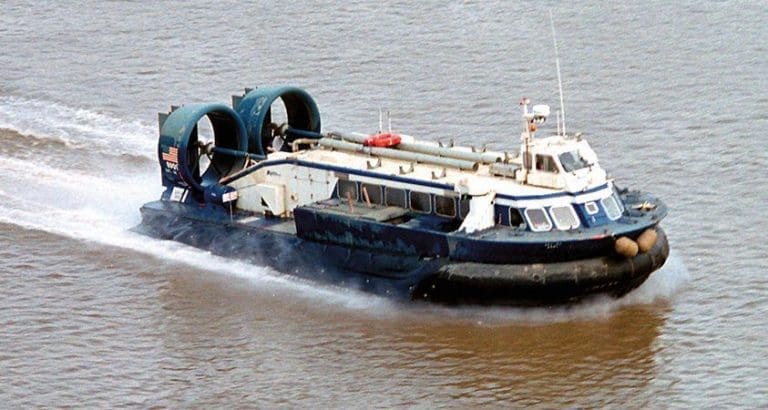
NANA/Lynden Logistics is established to provide transportation services for the Red Dog Mine in partnership with NANA Regional Corporation. It is renamed DeLong Mountain Logistics in 2020.
Hovercraft service begins from Bethel.
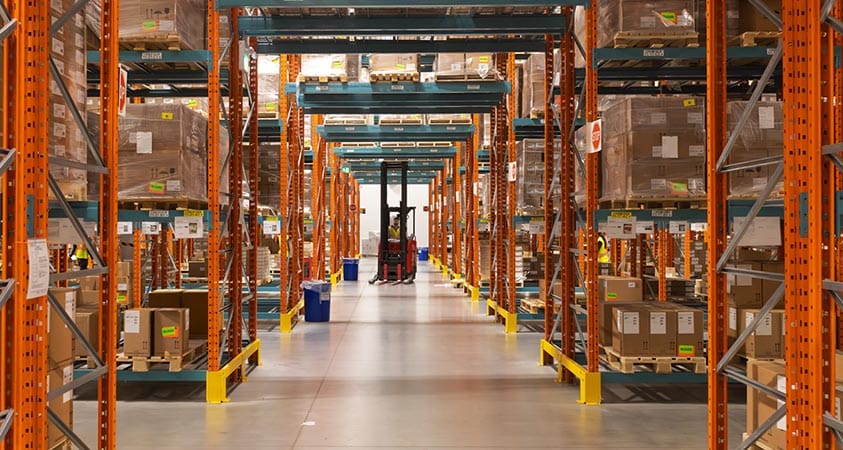
Lynden International Logistics is established to provide distribution services to Canada’s healthcare industries.
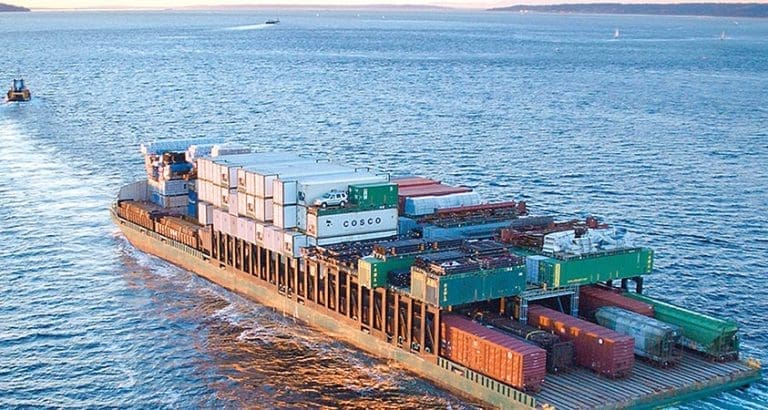
Rail barge service begins to Whittier, moving rail cars for the Alaska Railroad and general cargo to Alaska’s railbelt. Overhead racks to carry containers above rail cars are added in 2003 and patented in 2006.

Lynden Air Freight becomes Lynden International. In 2021 it is renamed Lynden Logistics.
Lynden celebrates the 50th anniversary of service to Alaska.

Lynden acquires Northland Services, adding barge service to Western Alaska and Hawaii.

Lynden Oilfield Services, a division of Alaska West Express, is formed to provide oilfield support services on the North Slope of Alaska.

Lynden Air Cargo reaches milestone of serving all seven continents when it supports a month-long research mission in Antarctica.

Alaska Marine Lines expands services to Alaska North Slope villages and the oil patch. The new Arctic locations result in scheduled service to every major coastal region in Alaska.

Barge service to Hawaii is expanded with the purchase of two high-capacity barges, the Kamakani and Namakani. A sister barge, the Makani Loa, is built and added to the fleet in 2024.
Aloha Marine Lines moves terminal from Pier 29 in Honolulu to Barbers Point in Kapolei, Hawaii.
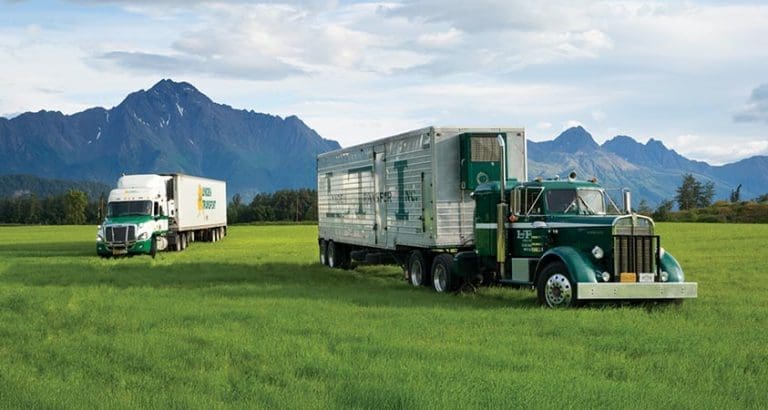
Lynden celebrates the 70th anniversary of service to Alaska.